Treatment-resistant Depression in Tulsa: Is TMS Right for You?
When two or more antidepressants haven’t been enough, there’s still hope. Discover how transcranial magnetic stimulation (TMS) therapy works, what to expect, and how to get evaluated at Laureate.
By William Prueitt, MD
For many people living with depression, finding the right treatment feels like a long road. You try one medication, then another — and while some people find relief, others don’t get the improvement they’re looking for.
If that sounds familiar, you’re not alone, and there are more options than you might realize.
One of those options is TMS.
What is TMS?
TMS stands for transcranial magnetic stimulation. It’s an outpatient treatment for depression that works differently than antidepressants.
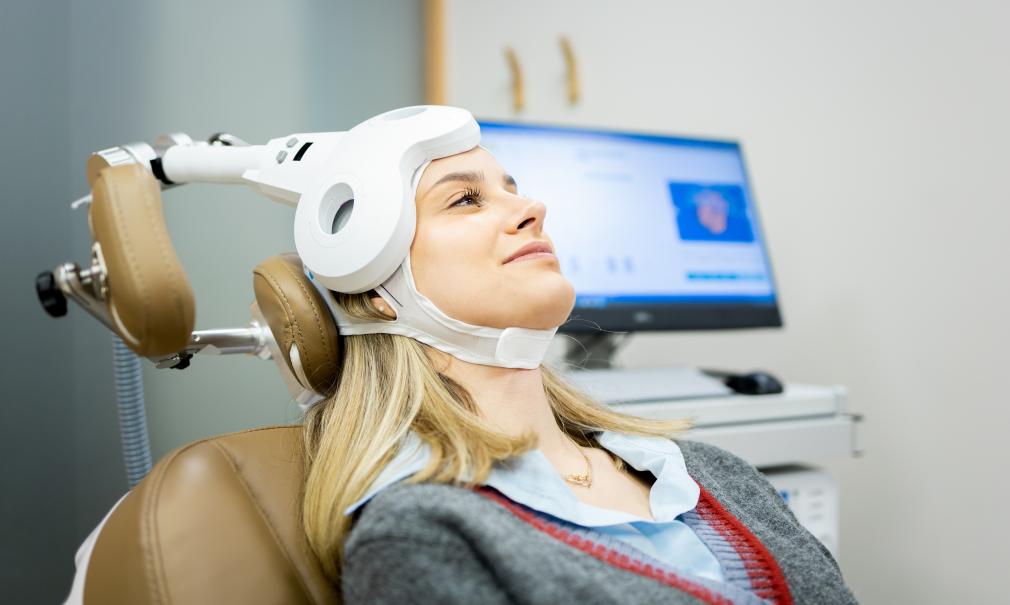
Instead of changing brain chemistry through medication, TMS uses a small electromagnet placed against the scalp to gently stimulate a specific area of the brain associated with depression.
The goal is to help that area of the brain function in a healthier rhythm — without the side effects that can come with adding more medications.
What Does a TMS Treatment Feel Like?
Patients are awake throughout the treatment and often describe a mild tapping sensation at the treatment site. You should feel normal after the treatment and can drive yourself home afterward, go back to work, and continue your normal routine.
A typical TMS course looks like this:
- 20-minute sessions, five days a week, for six weeks
- Followed by three sessions a week for two additional weeks
- No sedation, no recovery time
The daily schedule is a commitment — but for many patients, it’s manageable alongside work and family life.
Who Is TMS For?
TMS may be a good fit if you have moderate to severe depression and haven’t seen adequate improvement after trying at least two antidepressants.
It’s not a last resort — in some cases, it may be worth considering earlier because of its low side-effect burden.
At Laureate Psychiatric Clinic and Hospital (part of Saint Francis Health System) patients receive a full evaluation before starting TMS. That includes a review of medical and psychiatric history, prior medications, and any factors — like anxiety, trauma or insomnia — that may be contributing to treatment resistance.
What Happens After Treatment?
When the initial course ends, treatment stops — and the benefit often continues.
Many patients find that improvement lasts a year or more. If depression returns down the road, a repeat course may be an option, and patients who responded the first time often respond again.
Taking the Next Step
If you or someone you love has been struggling with depression despite medication, it may be time to explore what else is possible.
Laureate’s team specializes in exactly these situations — and TMS is just one of the interventional treatments they offer.
Talk to your doctor about a referral to Laureate or call us to learn more at 918-491-3700.
Relevant Blogs to Read


What Everyone Should Know About Suicide Prevention: Myths, Warning Signs, and How to Help
View Story