A Day in the Life at Glenpool: What a Freestanding Emergency Dept. Means for Our Community
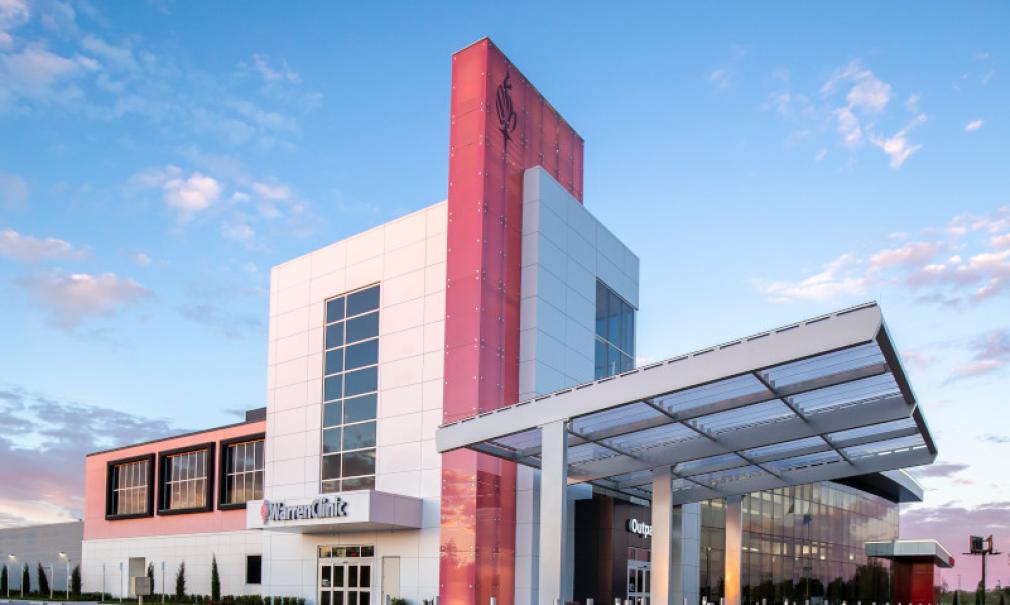
Clinical Manager Jessica Donaho talks about what her team does and why the free-standing emergency department model works so well.
By Jessica Donaho MSN, BSN, RN
Clinical Manager, Saint Francis Glenpool
People sometimes ask me why I keep coming back to emergency medicine. My answer is always the same: you have to know a little bit of everything, and you have to be ready to use it at any moment — because you never know what's going to walk through that door.
I'm proud to be part of the team at Saint Francis Glenpool, and I want to share a little bit about what we do here, why it matters, and why this model of care is something I believe in deeply.
What Is a Freestanding ED, and Why Does It Exist?
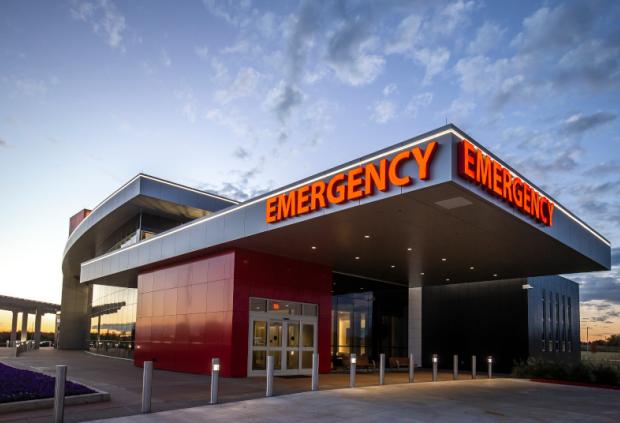
A freestanding emergency department — or FSED — is a specialized facility offering full 24/7 emergency care without being physically attached to a hospital. We are licensed as an outpatient department of Saint Francis South, and we are staffed with emergency-trained providers around the clock.
We evaluate, stabilize, run diagnostic tests, and treat both minor and major situations. And when a situation requires a higher level of care than we can provide, we get you to exactly the right facility — fast.
If you live in a rural area and have a health emergency, a 10-minute drive to your nearest FSED instead of 20-30 minutes to the nearest hospital ER could be the difference between life and death.
For people south of Tulsa, my team at Glenpool can see you quickly, get your treatment started immediately, and if you need a transfer, we arrange a direct admission — meaning you're guaranteed a bed when you arrive, rather than possibly waiting in a queue.
In a true emergency, that time is everything.
Serving a Community That Needed Us
When we opened in June 2018, we saw about 14 patients a day. Within the first two or three months, that number had doubled. Today, we average around 60 patients a day — more than 21,000 in a year — and that number continues to grow.
About 95% of our patients walk in on their own — which speaks to the trust people have placed in us. We also receive around 50 ambulances a month, and we are the only certified acute stroke-ready ER in this area.
In rural areas, emergency medical services often operate at a basic level without paramedics. We fill that gap. We are a hub — not just for Glenpool, but for all the rural communities south of Tulsa.
What We Can Do at Saint Francis Glenpool
We have 11 treatment rooms, two triage rooms, and a dedicated trauma room.
On the imaging and diagnostics side, we offer CT, X-ray, mammography, ultrasound, vascular ultrasound, echocardiogram, and a full lab.
For most emergencies, we have everything we need to get you stabilized and on the right path.
To give you a sense of how that looks in practice: when someone comes in with chest pain and we suspect a heart attack, within minutes we have an EKG, the patient is in a room, a nurse is placing an IV and drawing labs, our secretary is calling for emergency transport, and the physician is already on the phone with the cath lab.
By the time the ambulance arrives, the patient is ready to go; door to transfer in about 25 minutes. That kind of coordinated, rapid response saves lives.
Why I Love This Work — and This Place
I've done a little bit of everything over the course of my career, and I always find my way back to emergency medicine. Here in Glenpool, I get the best of both worlds: the full breadth of emergency care, and the ability to spend meaningful time with my patients.
At the end of the day, my job is simple to describe, even if it isn't always simple to do: I am here to make sure that the worst day of someone's life isn't the last day of their life. That's what gets me up in the morning. That's why we're here.