
Advanced Life Support Care in Tulsa: What You Need To Know
By Aly El Banayosy, M.D.
Direct, Acute Circulatory Support and Specialty Critical Care
Saint Francis Heart and Vascular Institute
Some patients arrive at a hospital in a condition so critical that their heart can't pump and their lungs can't breathe. They need something more — a machine that can do those jobs for them while their body fights to recover.
That technology exists, and Saint Francis now offers it at a level that puts this program among the best in the region.
What Is ECMO?
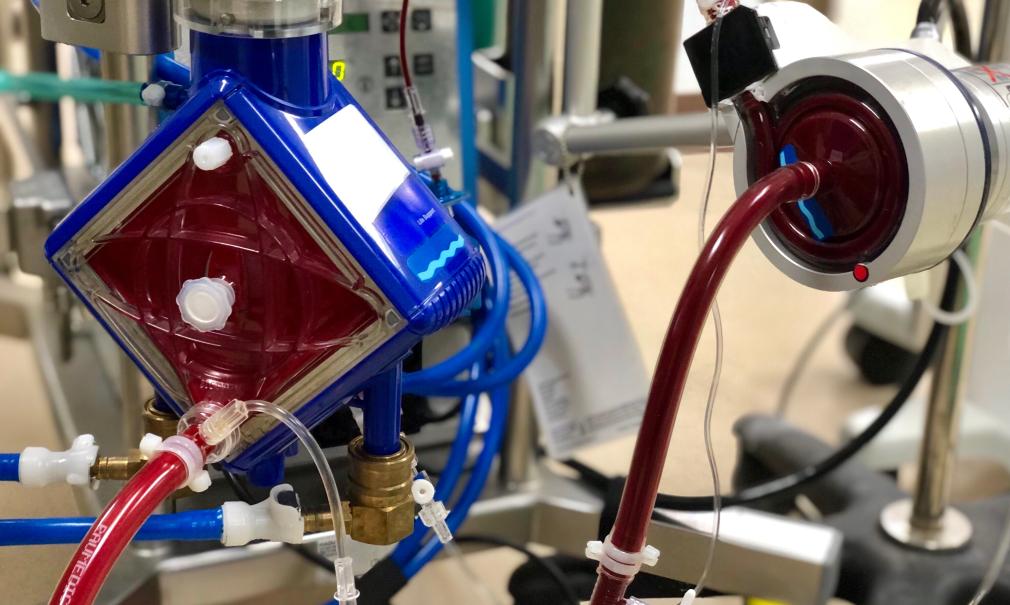
ECMO — extracorporeal membrane oxygenation — is an advanced life support system that takes over the work of the heart, the lungs, or both when they are too damaged or exhausted to function on their own.
It circulates blood outside the body, oxygenates it and returns it — buying time for the heart and lungs to rest and recover, or bridging a patient to a transplant or long-term device.
It is one of the most complex and demanding therapies in modern medicine. And since launching its ECMO program in May 2024, Saint Francis has treated more than 130 cases — with survival rates that exceed national expectations.
Care That Doesn't Stop
For patients on ECMO, around-the-clock expert oversight isn't optional — it's essential. Saint Francis staffs its cardiovascular ICU with dedicated cardiovascular intensivists 24 hours a day, seven days a week.
The team includes five cardiac intensivists and six advanced practice providers with specialized training in ECMO, ventricular assist devices and other advanced circulatory support therapies.
That level of continuous, specialized critical care means the most fragile patients never have to be transferred elsewhere for the expertise they need.
Bringing ECMO to Patients Who Can't Wait
One of the program's most significant capabilities is portable ECMO — sometimes called "suitcase ECMO."
When a patient at another hospital needs ECMO support but is too unstable to survive transport, the Saint Francis team can bring a fully functional ECMO system to that facility, initiate support on-site and safely transfer the patient back to Saint Francis accompanied by an intensivist.
For patients who would otherwise have no survivable path to advanced care, this capability is lifesaving.
Results That Speak for Themselves
Saint Francis reports its outcomes to the international ECMO registry — a global database that tracks survival and performance across ECMO programs worldwide.
The results are striking: for patients with an anticipated mortality of 75 to 90 percent, Saint Francis is achieving survival rates better than 50 percent — even while accepting some of the most severe and high-risk cases referred from across the region.
What's Next
The program's next major initiative is ECPR — using ECMO as part of the resuscitation process for patients in cardiac arrest.
In collaboration with EMSA, Saint Francis is working toward a model that would allow ECMO to be initiated for any cardiac arrest within 30 minutes of the hospital, including arrests that occur outside the hospital.
The goal is straightforward: make sure that no patient in eastern Oklahoma loses their chance at survival simply because advanced support wasn't available in time.
Relevant Blogs to Read


What Everyone Should Know About Suicide Prevention: Myths, Warning Signs, and How to Help
View Story