
Eastern Oklahoma Has a New Level 1 Trauma Center: What It Means For You
By Brock Goodwin, D.O.
Trauma Surgeon, Trauma Medical Director
Saint Francis Health System
When a serious accident happens — a car crash, a severe fall, a gunshot wound — where you're taken matters enormously. Level I Trauma Centers represent the highest standard of emergency trauma care, and Saint Francis is now verified at that level by the American College of Surgeons.
For patients across eastern Oklahoma, that distinction is more than a credential. It's a guarantee.
What It Takes to Earn Level I Verification
Level I verification by the American College of Surgeons isn't awarded — it's earned through sustained commitment across every dimension of trauma care. At Saint Francis, that process began with a clear mandate from me: build a program capable of caring for the most critically injured patients, with the depth, readiness and expertise to handle anything.
To achieve Level 1 certification, Saint Francis rebuilt and advanced its trauma program from the ground up:
- Rebuilding the trauma team and facilities
- Investing in advanced imaging, precision-guided surgical tools and real-time transfusion tracking
- Recruiting top-tier trauma surgeons and subspecialists
- Reshaping clinical protocols and policies across the care continuum
The Team Behind the Care
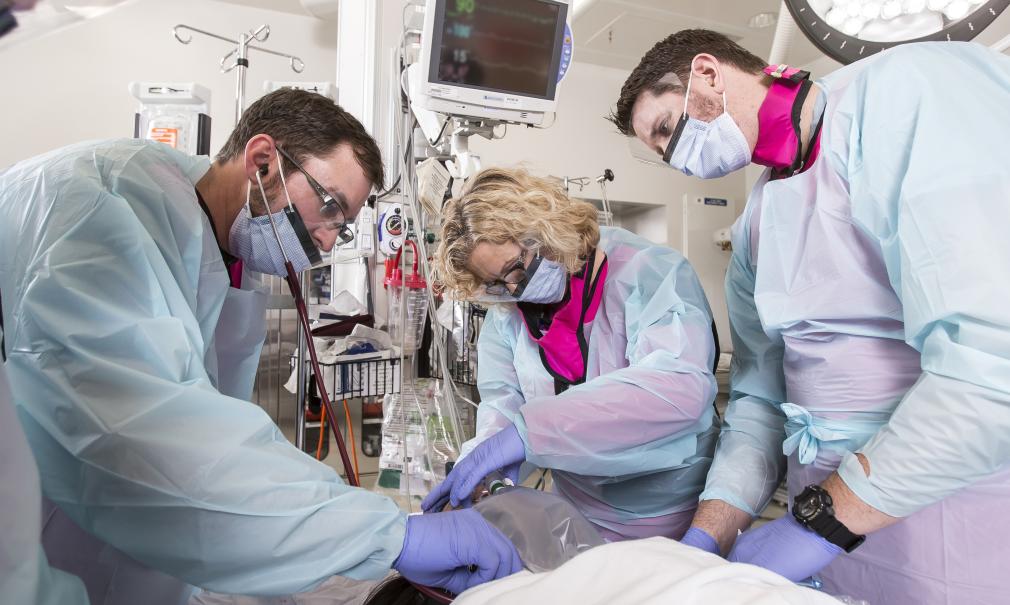
Assembling the right physicians was central to the effort. Saint Francis trauma surgeons are dual board-certified in general surgery and trauma/surgical critical care — among the most rigorous training pathways in medicine.
They're supported by subspecialists in orthopedic trauma, neurosurgery, oral and maxillofacial surgery, microvascular and plastic reconstruction, ophthalmology and anesthesiology.
Recruiting that talent required more than job postings. We relied on direct, peer-to-peer conversations to appeal to physicians' sense of purpose. When you have a doctor talking to a doctor, sometimes you can be more convincing.
Quote from Dr. Goodwin
It was a beautiful thing to see the medical staff come together to support this venture...and we will not be diverted from that course.
A Health System Effort
Achieving Level I verification required contributions from far beyond the operating room. Hospital President Doug Williams was clear about that. "Trauma is truly a health system accomplishment," he said. "One that involved procurement, custodial staff, accounting and every department in between."
On the clinical side, the work spans the full continuum of care, from pre-hospital response through post-acute recovery. "We continuously evaluate outcomes and make changes to improve," said Mary Johnson, Executive Director of Trauma Services. The insights gained at Saint Francis also support trauma education and outreach across rural Oklahoma, where access to high-level trauma care has historically been limited.
Built to Last
The goal was never just to earn verification — it was to build a program resilient enough to sustain it. That meant creating depth and redundancy throughout the team so that exceptional care doesn't depend on any single physician.
"We've created redundancy so we're not dependent on any one physician," Williams said. "We're ready for anything that comes through our doors."
A unique public-private partnership between Saint Francis and the Oklahoma State University Medical Authority — established by the Oklahoma Legislature — is helping ensure that commitment extends into the future, bringing medical residents into every aspect of trauma care and helping shape how trauma is handled across the state.
For patients in eastern Oklahoma, the message is straightforward: when the worst happens, the highest level of trauma care is right here.
Relevant Blogs to Read


What Everyone Should Know About Suicide Prevention: Myths, Warning Signs, and How to Help
View Story