

An Irregular Heartbeat is Treatable — and Earlier is Almost Always Better
By David Robert Okada, M.D. & Venkatesh Ravi, M.D.
Most people experience a skipped beat or a brief flutter from time to time. But when heart rhythm problems become frequent, persistent or disruptive to daily life, they deserve attention — and the sooner they're addressed, the more options are available.
At Saint Francis Heart and Vascular Institute, our comprehensive electrophysiology program offers the full spectrum of arrhythmia care, from the latest ablation techniques to advanced device therapy.
Treating the Full Range of Rhythm Disorders
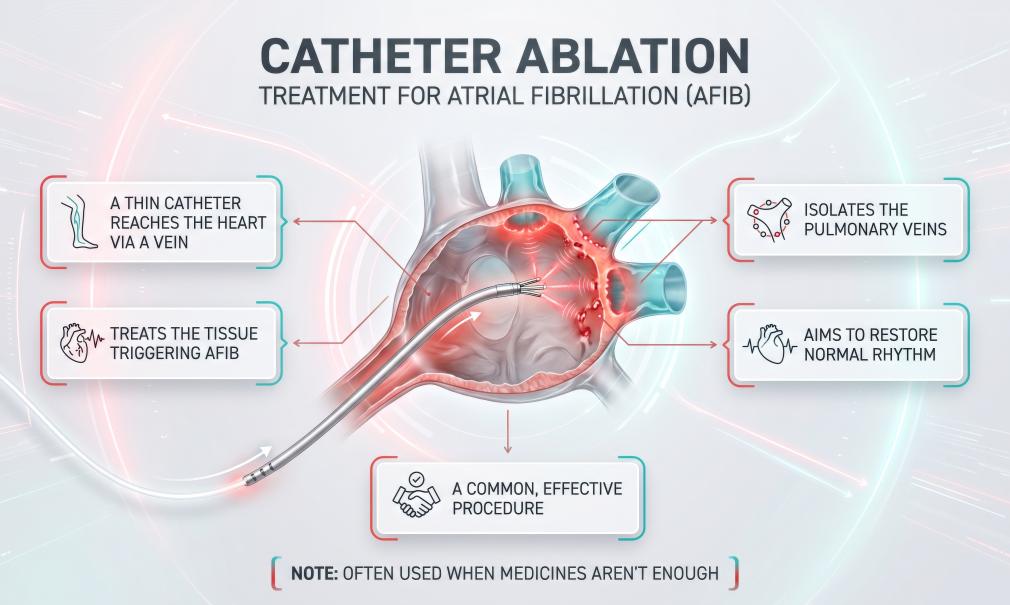
The electrophysiology (EP) team at Saint Francis manages all major heart rhythm conditions, including atrial fibrillation, atrial flutter, supraventricular tachycardia and ventricular tachycardia. Treatment plans are individualized — built around each patient's specific rhythm disorder, overall health and long-term goals — with close follow-up to make sure results hold over time.
Procedures include catheter ablation, pacemaker and defibrillator implantation and extraction, and a growing range of advanced device options.
The majority of EP procedures, including atrial fibrillation ablations performed under general anesthesia, are done on an outpatient basis — with most patients discharged the same day after a few hours of rest.
Technology That Makes Treatment More Precise and More Effective
Two significant advances are changing what arrhythmia care looks like for patients.
The first is three-dimensional cardiac mapping — technology that allows the electrophysiology team to create a detailed, real-time picture of the heart's electrical activity and target the exact area causing the problem. The result is an ablation strategy that is more individualized, safer and more efficient, with reduced risk to surrounding tissue.
The second is pulse field ablation (PFA), a newer energy source for treating atrial fibrillation. Unlike traditional thermal ablation techniques, PFA is highly tissue-selective — meaning it targets the problem area precisely while significantly reducing risk to nearby structures. It also improves procedural efficiency, which benefits both patients and outcomes.
Devices That Keep Working After You Leave
For patients who need ongoing rhythm support, Saint Francis offers the full range of cardiac devices — including leadless pacemakers, which eliminate the need for traditional leads threaded through blood vessels, and subcutaneous ICDs, which are implanted just under the skin without touching the heart directly.
All device patients have access to robust remote monitoring systems that allow our care team to track heart rhythm continuously between visits — catching changes early and giving patients the convenience of expert oversight without frequent in-person appointments.
With remote monitoring, we are able to catch things earlier, and patients are happy with the convenience and the level of care it enables. — Venkatesh Ravi, M.D.
The Case for Acting Early
One message we both want to emphasize: arrhythmias are much easier to manage and treat before they become persistent. A rhythm disorder that's caught and treated early typically responds better to treatment — and leaves you with more options.
We've found that arrhythmias are markedly easier to manage before they become persistent or longstanding. For this reason, we recommend early referral and timely evaluation to optimize effectiveness of treatment." — David Okada, M.D.
If you've been experiencing palpitations, a racing heart, irregular heartbeat or unexplained dizziness or fatigue, don't wait to see if it resolves on its own. Talk to your provider about a referral to the electrophysiology program at Saint Francis Heart and Vascular Institute — the sooner the conversation starts, the more tools the team has to help.
Relevant Blogs to Read


What Everyone Should Know About Suicide Prevention: Myths, Warning Signs, and How to Help
View Story