
Tulsa Whole Blood Program Marks a Year of Saving Lives
By Nathan Powell, D.O.
Director, Surgical Critical Care, Trauma Surgeon
Saint Francis Hospital
In a life-threatening trauma, the care you receive in the first few minutes — before you ever reach the hospital — can determine whether you survive. That's the idea behind Tulsa's Whole Blood Program, and since its launch in July 2024, it's already proving itself.
What Is the Whole Blood Program?
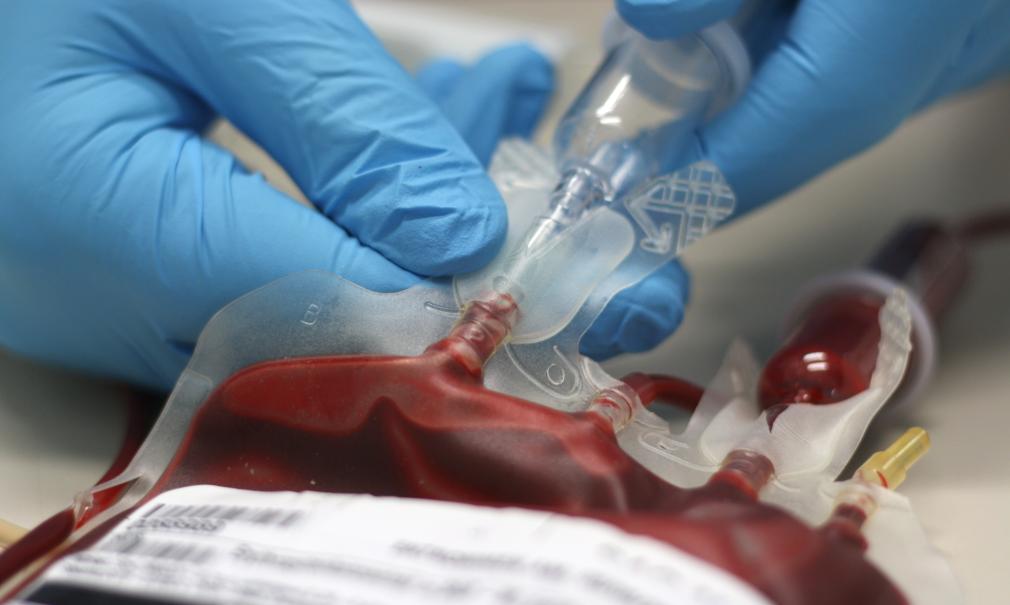
When someone suffers a traumatic injury and is losing blood rapidly, the body goes into shock. Every minute without intervention makes survival less likely. Whole blood transfusion — administered by paramedics at the scene or during transport — stabilizes patients long enough to get them to the trauma care they need.
In July 2024, Tulsa became the second city in Oklahoma to offer this level of pre-hospital trauma care. The program is a partnership between Our Blood Institute (OBI), EMSA, Tulsa Fire Department and Saint Francis Hospital.
The Results Speak for Themselves
In the program's first year, 45 Tulsa patients received whole blood in the field. Those patients came in with a range of injuries — penetrating trauma, blunt injuries and medical bleeds. Every single one survived to hospital admission. 83% survived to discharge.
Patients also showed measurable improvement in shock index — vital signs that typically worsen during transport — after receiving whole blood in the field.
"We've seen firsthand the difference whole blood makes for our patients," said Dr. Nathan Powell, director of surgical critical care at Saint Francis Hospital. "For someone with life-threatening injuries, minutes matter. Whole blood in the field can stabilize patients long enough to get them to definitive care — and that can be the difference between life and death."
How It Works in Tulsa
Tulsa is divided along Interstate 44 for trauma response, with patients transported to one of two trauma centers based on location and need. Every Wednesday, EMSA and Tulsa Fire each pick up one unit of whole blood from OBI. Units are administered to patients meeting specific criteria in the field. Any unused blood is returned to OBI the following Wednesday, processed and transferred to Saint Francis for use before expiration — ensuring nothing goes to waste.
In the program's first year, Saint Francis accepted 108 unused units, playing an essential role in keeping the program running and every unit of blood accounted for.
"Whole blood truly bridges the gap between the point of injury and definitive care," said Kayla Stack, EMSA paramedic and field operations supervisor. "It stabilizes patients at the scene, allows for a seamless transition to hospital care and buys crucial time for medical staff to administer the right blood products for long-term treatment."
A Commitment to This Community
The groundwork for Tulsa's program was laid in Oklahoma City, where a similar partnership launched in 2023. It took nearly two years to finalize processes and contracts there. When Tulsa was ready to move, the work was already done — and the program launched quickly as a result.
For Saint Francis, this program is about more than medicine.
"Every unit of blood we help preserve or provide represents a chance for someone's parent, child or loved one to make it through an unthinkable moment," Dr. Powell said. "For us, this is more than a medical program — it's a commitment to our neighbors."
When the worst happens, Tulsa's trauma system is ready — and for many patients, that readiness now begins before they ever reach the hospital doors.
Relevant Blogs to Read


What Everyone Should Know About Suicide Prevention: Myths, Warning Signs, and How to Help
View Story