What I Want My Patients to Know About Structural Heart Procedures
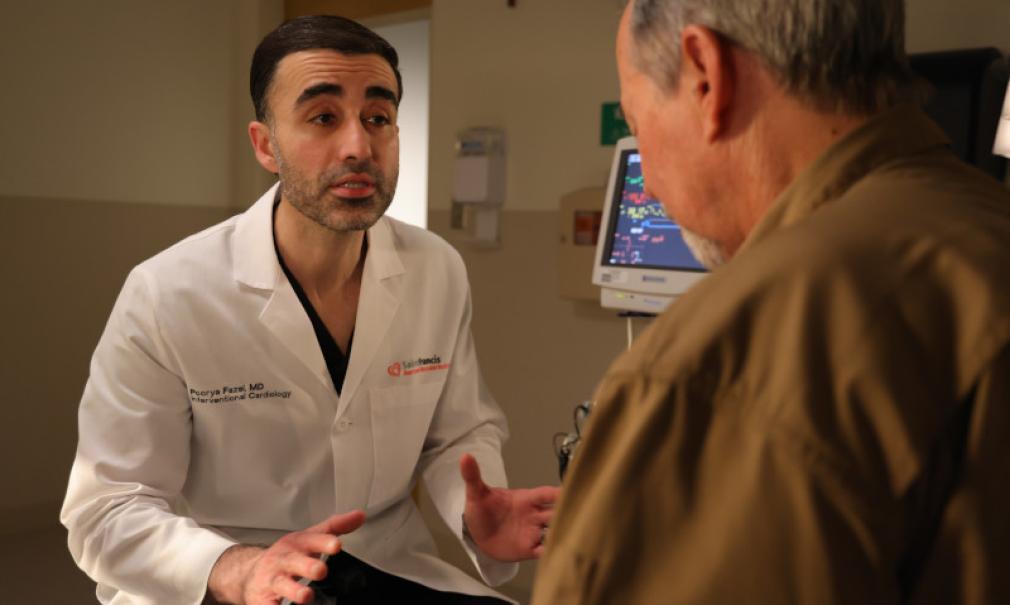
Director of Structural Heart Dr. Fazel addresses common concerns and misconceptions about transcatheter procedures at Saint Francis Heart and Vascular Institute
Poorya Fazel, MD
Saint Francis Heart and Vascular Institute (HVI)
Director of Structural Heart
When patients come to see me for a structural heart problem, they often arrive with a mix of hope and hesitation. I've had hundreds of these conversations, and I've noticed the same questions and worries come up repeatedly.
I want to take a moment to address some of those concerns honestly — and share what I think makes the work we do here so meaningful.
"Am I Too Old for This?"
This is probably the question I hear most often, and I'm glad people ask it.
The short answer is age alone is not a limiting factor. In fact, these procedures were specifically designed for patients who would be considered too high-risk for traditional surgery. We've treated patients who are 100 years old. We've treated patients in their 30s.
The average age for a valvular procedure tends to fall between 70 and 80, though that number is getting younger as techniques become more refined — patients in their 60s are quite routine now.
The key thing I want people to understand is this: this is not surgery. These are interventional procedures built with patient safety at the forefront, offering excellent outcomes even for those with complex health needs.
Recovery Is Faster Than You Might Expect
The other concern I hear frequently is about recovery time; people imagine weeks of recovery, disruption to their lives, time away from family.
The reality is quite different. Most of my patients are home within 24 hours of their procedure and back to normal daily activities within one to two days.
That's a fundamentally different experience from conventional surgery — and for many patients, it's life-changing to realize how accessible this path forward can be.
Devices and Medications — Better Together
I always want to start with medicine.
Medical therapy has advanced enormously, and it's the foundation of what we do. But for patients with mitral, aortic, or tricuspid disease who haven't responded to medications as fully as we'd hope, the data is clear: adding a device improves both quality of life and longevity — with a strong safety profile.
I think of device therapy as a complement to medical therapy, not a replacement for it. It's about finding the right combination for each individual patient.
This Field is Rapidly Advancing
I find this field genuinely thrilling to work in right now. Mitral valve replacement just received FDA approval, and there are many more repair and replacement technologies coming.
The field is moving fast, and patients who might not have had good options a few years ago are increasingly candidates for effective, low-risk treatment.
The tricuspid valve is an area I'm particularly excited about. Surgical repair of the tricuspid carries high risk and high mortality — but transcatheter tricuspid procedures are very low-risk by comparison.
What Makes Our Team Different
I'm proud of a lot of things about what we've built here at Saint Francis HVI, but the thing I'm most proud of is our culture.
We are a true heart team — interventional cardiologists, imaging specialists, heart failure experts, and surgeons, all sitting down together to determine the best therapy and timing for each individual patient. That kind of integrated, multidisciplinary conversation isn't universal, and I think it makes a real difference in outcomes.
If you have questions about whether a structural heart procedure might be right for you, I'd encourage you to reach out to your provider. The conversation is always worth having.