Advance Care Planning: What Every Physician Needs to Know—And Start Doing

How to facilitate better advance care plan adoption in your patients
By Sister Marysia Weber, RSM, DO & Julie Pittman, J.D.
If you have practiced medicine for any length of time (especially in a hospital) you have likely stood at the bedside of a patient who could no longer speak for themselves—surrounded by family members you had never met, fielding questions you had no good answers to, and making decisions that felt neither medically sound nor aligned with what the patient might have wanted.
We have been there. Many of us have.
Advance care planning (ACP) is the clinical and ethical infrastructure that prevents that scenario. And yet, as a profession, we remain remarkably reluctant to make it routine.
This post is written for clinicians, with one goal: to give you the conceptual clarity and practical language to begin—or deepen—your engagement with advance care planning in your own practice.
Advance care planning is not about death. It is about ensuring that every patient, at every stage of life, has a voice in their own care.
What Advance Care Planning Actually Is—and What It Isn't
The primary barrier to ACP is patients’ discomfort with death and dying. Patients hear the words “advance directive” and think: terminal illness, hospice, giving up. Physicians often carry a version of the same misconception.
Advance care planning is not exclusively an end-of-life tool. It applies to any situation in which a patient loses medical decision-making capacity, whether temporarily or permanently.
Consider a 28-year-old who is briefly unconscious after a motor vehicle accident. Without an advance directive designating a health care proxy, clinical staff must default to a statutory hierarchy of decision makers—which may not reflect the patient’s actual preferences at all. If the patient recovers fully and leaves the hospital the next day, the episode may seem inconsequential. But it need not have been ambiguous.
The advance directive is a “just in case” document. It is appropriate for every adult patient you see, regardless of age, diagnosis, or prognosis. Framing it as such may help enable more productive conversations with your patients.
Why Physicians Avoid the Conversation—and Why That Avoidance Costs Everyone
When we ask physicians why they haven’t initiated ACP conversations with patients they’ve seen repeatedly, I hear consistent themes:
- "I don’t want the patient to think I’ve given up on them."
- "I’m worried about liability if I don’t pursue every available option."
- "There’s no designated decision maker, so I feel I have no choice but to do everything."
- "I don’t know how to bring it up in a way the patient will respond to well."
These are legitimate concerns. They are also, in most cases, addressable ones.
On the question of abandonment: patients who feel heard and whose values are documented are not patients who feel abandoned. They are patients who feel respected. The framing matters: "I want to make sure that if anything unexpected happened, the people caring for you would know exactly what you’d want" is not the same conversation as "Let’s talk about what happens when you die."
On the question of liability: the fear that defaulting to medical intervention is legally safer than goal-concordant care is widely held and largely unfounded. A patient with decision-making capacity has the right to make decisions about their healthcare, including the right to refuse treatment. A patient without decision-making capacity still has the right to have their wishes followed either as outlined in an advance directive or similar document or through health care proxy. Your role is to provide health care tailored to the patient’s known wishes and values.
On the absence of a decision maker: the Oklahoma statutory hierarchy defaults to the spouse, then to adult children (all equally, not by birth order—a fact many families do not know), then to other relatives or close friends.
But statutory defaults are not the same as a designated proxy who knows the patient, understands their values, and has had the conversation in advance. The presence of an advance directive does not eliminate family disagreement; it provides the legal and ethical framework for navigating it.
The physician who feels trapped performing futile interventions in the ICU is often the downstream consequence of an ACP conversation that never happened in the outpatient setting.
Common Myths Your Patients Will Bring to the Conversation
Anticipating patient misconceptions allows you to address them directly. The ones we encounter most frequently:
- "I’m not dying—why are you asking me this?" Reframe: this document is for any circumstance in which you cannot make health care decisions for yourself, including a temporary one.
- "If I sign this, you’ll stop treating me." Clarify: an advance care plan does not limit the care you receive; it ensures care reflects your wishes.
- "My spouse can make these decisions for me automatically." Correct: without a designated proxy, the statutory hierarchy applies—and may not produce the outcome the patient intends.
- "I’ll do this when I’m older." Respond: the patients most likely to need this document are often the ones who never expected to need it.
Practical Considerations: Witnessing, Filing and What Goes Where
A few points of clinical and operational importance:
On witnessing: Saint Francis employees may witness a standalone healthcare advance directive so long as they are not related to the patient or an heir of the patient. However, Saint Francis employees should not witness or notarize documents that are not health care related and only concern a patient’s property or assets.
On filing: an advance directive is most useful when it is accessible. At Saint Francis, patients can submit their documents to you or Health Information Management (HIM) for upload to MyChart. MyChart also allows patient self-upload.
These are the preferred pathways. A document in a safe deposit box or with an attorney is, practically speaking, inaccessible at 2 a.m. on a Saturday. Encourage patients to carry a wallet card indicating where their directive is filed and who their proxy is.
On the inpatient/outpatient gap: at Saint Francis, we are actively building ACP prompts into both the outpatient scheduling workflow and the inpatient admissions process. The goal is for the advance directive conversation to become as routine as medication reconciliation. Staff training, physician checklists, and patient-facing educational resources are in development.
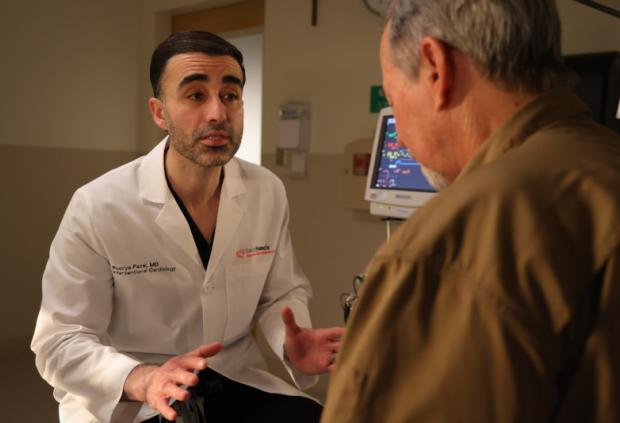
In the meantime, the most powerful intervention available to any clinician is simply asking.
A Note on Legislative Updates
Oklahoma advance directive law is undergoing significant revision. Legislation consolidating the Advanced Directive for Health Care, the Advanced Directive for Mental Health, and the Health Care Power of Attorney Act into a single unified act is expected to take effect July 1, 2027. Clinicians should plan to review updated institutional policies and patient-facing materials prior to that date.
Where to Begin
You do not need a full systems implementation to start; you just need a question. Consider building one of the following into your standard new-patient intake or your next follow-up with a patient you have been seeing for years:
- "Have you ever thought about who you’d want making medical decisions for you if you couldn’t make them yourself?"
- "Do you have an advance directive on file with us? Would you like information on completing one?"
- "If something unexpected happened and you couldn’t make medical decisions for yourself, is there someone who already knows what you’d want?"
Advance care planning is not a procedure. It is a conversation—one that our patients deserve to have before the moment of crisis, and one that we are uniquely positioned to initiate.