
How Early Detection Changed Everything for a Young Tulsan
By Saint Francis Health System Staff
Ideally, your routine checkup with your doctor is just that — routine.
For one Tulsa man, it turned out to be the appointment that may have saved his life. Charley was born with coarctation of the aorta, a congenital heart defect in which the aorta — the body's main artery — is narrowed, restricting blood flow to the heart.
At just four to five months old, he underwent surgery to correct it. Then, for nearly two decades, he lived a completely normal life.
"I had an extremely normal childhood," Charley says. "Maybe slightly immune compromised, but I didn't have to think about it at all. That was my whole life until a few months ago."
A Saint Francis Specialist’s Keen Eye
Charley had routine cardiology checkups every few years, but as he got older, he needed to transition from his pediatric cardiologist to an adult specialist. Around the same time, Dr. Pradyumna Agasthi joined the Saint Francis Heart and Vascular Institute.
Charley has his mother, Kim Walton, Executive Director of Patient Care Services at Saint Francis Hospital Muskogee, to thank for early awareness of Dr. Agasthi’s hiring; timing that turned out to be extremely lucky for Charley.
“I had no new side effects or warning signs at all,” Charley says. “I saw [Dr. Agasthi] on his first day in Tulsa—I saw him meeting the nurses.”
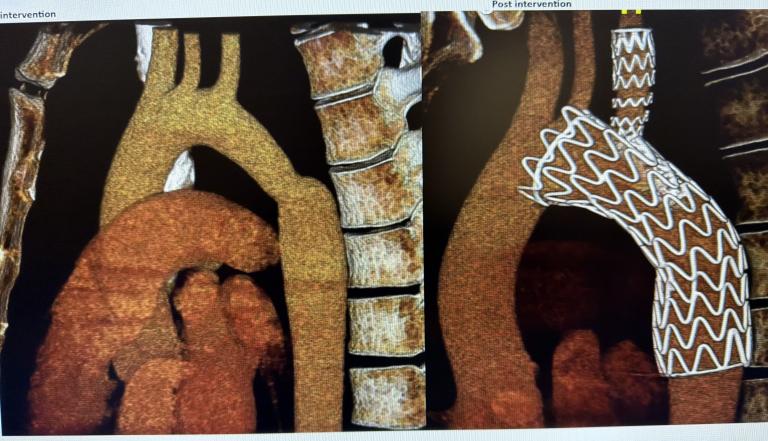
During his exam, Dr. Agasthi noticed a difference between Charley’s blood pressure in the femoral artery (lower body) and his upper body. He ordered a CT scan which confirmed: the aorta repair Charley received as an infant was failing, restricting blood flow through the aorta again.
There were no obvious warning signs. No symptoms. He had been active and healthy for years.
“I had so many years living normally and being very active, I was never limited by any symptoms or heart problems. It was shocking to hear I needed more, even knowing I have this defect,” Charley says.
"Heart failure would've snuck up on him," Kim says. "He's young and otherwise healthy — it would have gone to heart failure. As an infant, he was in a growth and development stage where cardiac muscles can heal. As an adult, heart failure would have been devastating. Early detection is huge.”
Choosing the Right Path Forward
The situation called for fast, precise action. Because of the location and nature of Charley's original repair, a traditional surgery or standard stent carried a high risk of damage and tearing.
Dr. Agasthi offered a third option — a newer, minimally invasive technique he had pioneered: a specialized graft functioning as a modified stent, designed to work within the constraints of Charley's unique cardiovascular needs.
"The alternative was major surgery," Charley says. "So, I was reckoning with having to do either this new technique or a full-blown open-heart surgery."
He chose the new approach.
Trusting the Process
The procedure went as well as it possibly could.
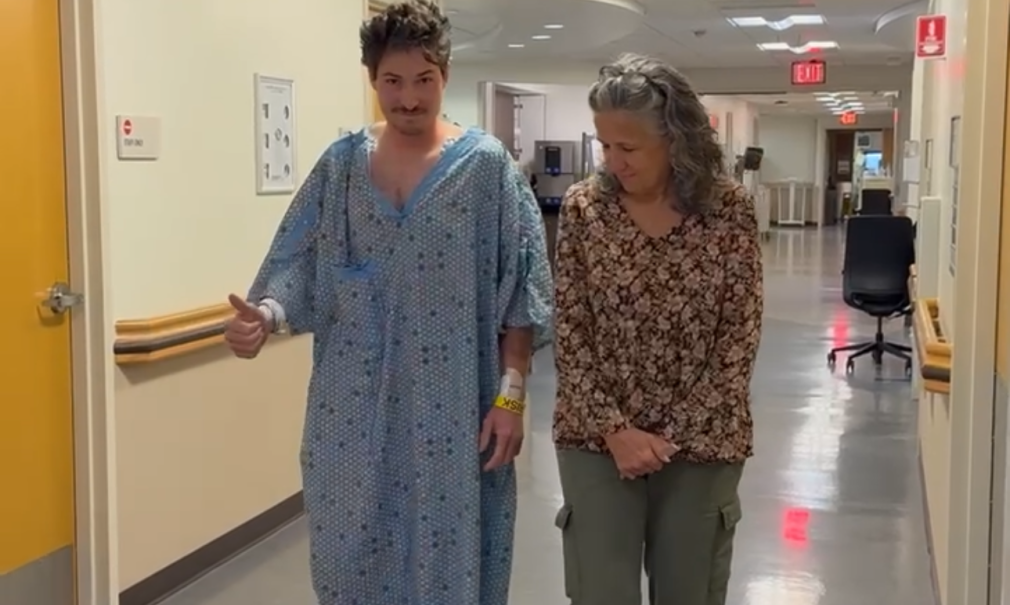
Charley was released the next morning. Then, unexpectedly, a fever arrived — along with significant back pain and chest pain — and he was readmitted for four days while the team ran tests to rule out infection.
Charley was Dr. Agasthi's sixth patient to undergo the procedure. The team took the post-operative complication seriously, and ultimately attributed it to an inflammatory response. A subsequent conversation with Dr. Agasthi confirmed he had seen the same reaction in another patient.
Charley was discharged on minimal medication. The symptoms resolved completely.
"It's an amazingly minimally invasive procedure," Charley says. "Remarkably non-invasive, not traumatizing. I had a great experience. It went really well."
For someone who describes himself as a person who "agonizes over details," the experience taught Charley something unexpected.
"What reassured me going through it was that I had some say in how we proceeded," he says. "But my choices were limited and not doing anything was not an option. My advice to anyone needing intervention: trust the process."
Charley is now slowly being tapered off blood pressure medication and expects to be on minimal long-term treatment. He continues follow-up care with Dr. Agasthi and looks forward to resuming the active life he's always known.
For Kim, the experience reinforced what she had hoped for when she first heard about Dr. Agasthi.
"It's so amazing how everything fell into place at exactly the right time," Kim says. "I'm just so grateful that Dr. Agasthi is part of Saint Francis."
Take a free heart health assessment
Relevant Blogs to Read


What Everyone Should Know About Suicide Prevention: Myths, Warning Signs, and How to Help
View Story