

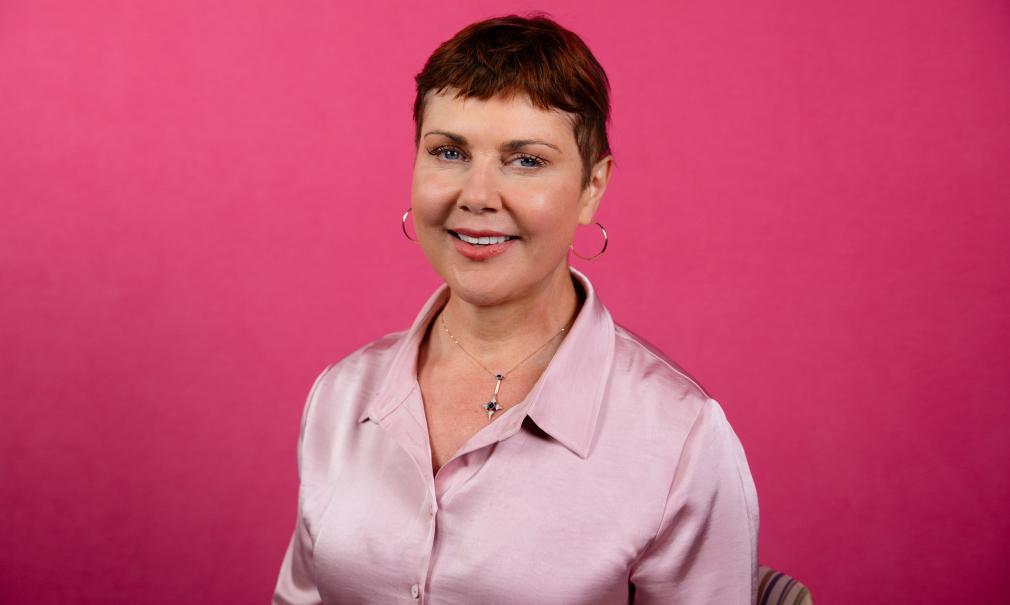
The Nurse Who Became the Patient — and Never Doubted Her Surgeon
By Saint Francis Health System Staff
For six years, Diane Pittman spent her weekends in the operating room at Saint Francis Hospital, helping care for patients during some of the most complex surgical procedures imaginable.
Many Fridays, she worked alongside neurosurgeon Dr. Scott Dull.
In March of 2026, she unexpectedly found herself on the other side of the operating table.
The Morning Everything Changed
"I was supposed to be at work with Dr. Dull that Wednesday morning," Diane recalled.
The evening before, the healthy and active 57-year-old had noticed unusual flashing lights in her vision. Thinking it might be a detached retina, she planned to see an eye doctor after work. But driving to Saint Francis the next morning, her symptoms suddenly worsened.
"It was like fireworks exploded in my head," she said. "I could barely see."
She managed to exit the turnpike, pull into a parking lot and call her husband. By the time he arrived, her vision had returned to normal. Instead of reporting to work, she went straight to the Saint Francis Trauma Emergency Center.
A CT scan revealed a growth the size of a large grape in the occipital region of her brain — the back left portion partly responsible for sight.
Knowing Exactly Who She Wanted
As an operating room nurse, Diane understood enough about her imaging to know she was stable — no bleeding, no hemorrhage, no immediate danger. But something was clearly there.
Dr. Dull arrived to check on his colleague shortly after.
Among coworkers, Dr. Dull is known as a man of few words — quiet in demeanor, exceptional in skill. Diane had seen it firsthand for years.
"He's very kind and very genuine with patients," she said. "When he's in the operating room, he's not there to socialize. He's meticulous and focused. I appreciate that about him."
Surgery would be needed. For Diane, there was never any question about who she wanted performing it.
"He's top of the line," she said.
The Surgery and What Followed
Two days later, Dr. Dull performed a craniotomy to remove the tumor — a precise procedure Diane compares to ice fishing, creating a careful opening in the skull to access the tissue below. The surgery lasted about an hour and a half.
Initial pathology revealed a high-grade tumor. Further testing confirmed the diagnosis: Grade 4 glioblastoma, one of the most aggressive forms of brain cancer, with a median survival of 12 to 18 months.
Several weeks after her first surgery, the visual disturbances returned. A second grape-sized tumor was discovered and treated with chemotherapy and radiation — but it continued to grow. On July 2, Dr. Dull removed it along with several smaller spots Diane calls "little weeds."
Because her case proved resistant to the chemotherapy available at Saint Francis Cancer Center, she has been referred to MD Anderson, home to one of the largest glioblastoma clinical trial programs in the country.
Living Her Best Life
Throughout her journey, Diane has refused to let her diagnosis define her. She goes to the gym. She's taking piano lessons. She's studying Spanish.
"I feel amazing," she said. "I'm living my best life."
She also gained a perspective few patients ever have — experiencing surgery as someone who knows the room, the staff and the surgeon not as a stranger, but as a colleague.
"I was 100% more comfortable because I knew the room, the staff and what was happening," she said.
That familiarity didn't just bring comfort. It brought conviction. The endorsement of a surgeon that carries the most weight isn't found in rankings or awards — it's found in the people who work beside him every day and would choose him without hesitation when it's their own life on the line.
For anyone facing a frightening diagnosis, Diane's advice is characteristically direct.
"Don't let it define you. Every day I tell myself, 'Mr. Tumor, you're there, and you need to stay in your lane.'"
Watch Diane Tell Her Story
Relevant Blogs to Read




What Everyone Should Know About Suicide Prevention: Myths, Warning Signs, and How to Help
View Story