
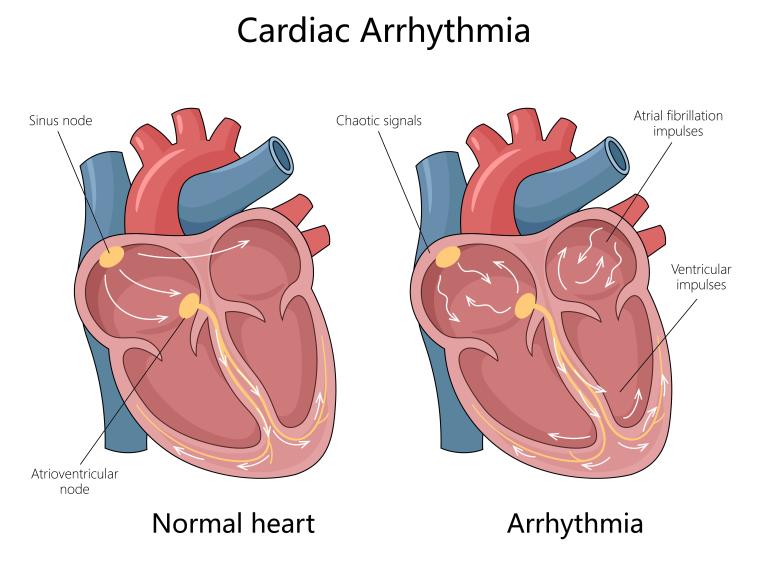
An arrhythmia (uh-RITH-mee-uh) is when your heart does not beat in a steady way. It may beat too fast, too slow, or skip around. Some rhythm changes are not dangerous, but others can cause serious problems. At Saint Francis Heart and Vascular Institute, we are here to provide high-quality heart care and help you lower your risk.
Symptoms
You may feel an arrhythmia in different ways. Some people have no symptoms. Common symptoms include:
- Fast heartbeat
- Slow heartbeat
- Heart pounding, fluttering, or “skipping” beats
- Shortness of breath
- Chest discomfort
- Feeling tired or weak
- Dizziness or feeling lightheaded
- Fainting (passing out)
When to get emergency care: Call 911 or go to the emergency room right away if you have chest pain or pressure, trouble breathing, fainting, sudden weakness or numbness on one side, trouble speaking, or symptoms that start suddenly and feel severe.
Lower Your Risk
These lifestyle habits reduce risk for anyone but especially those with arrhythmia symptoms:
- Take your medicines as directed for blood pressure, diabetes, and thyroid problems.
- Limit alcohol and caffeine if they trigger symptoms.
- Do not smoke or vape. Ask for help to quit.
- Get enough sleep. If you snore loudly or feel very tired during the day, ask about sleep apnea testing.
- Stay active with safe exercise. Ask your provider what is right for you.
- Eat heart-healthy foods (fruits, vegetables, whole grains, lean proteins) and drink water.
- Avoid illegal drugs and be careful with stimulant medicines. Tell your provider about all medicines and supplements you take.
- Manage stress with breathing, relaxation, or counseling.
Treatments
Treatment depends on the type of rhythm problem and your symptoms. Your Saint Francis care team may recommend one or more of these options:
- Lifestyle changes (sleep, stress, caffeine, alcohol)
- Medicines to help control heart rate or rhythm
- Medicine to lower stroke risk for some people (like those with AFib)
- A procedure to reset the rhythm (cardioversion)
- A procedure to stop the bad signals (catheter ablation)
- A device to help the heart beat safely (pacemaker) or treat dangerous rhythms (ICD)
Get Care Now
If you think you may have a heart problem, call your primary care provider. If you do not have a primary doctor and you are looking for heart care in Tulsa, call the Well Connected Hotline at 918-488-6688 to find a provider