

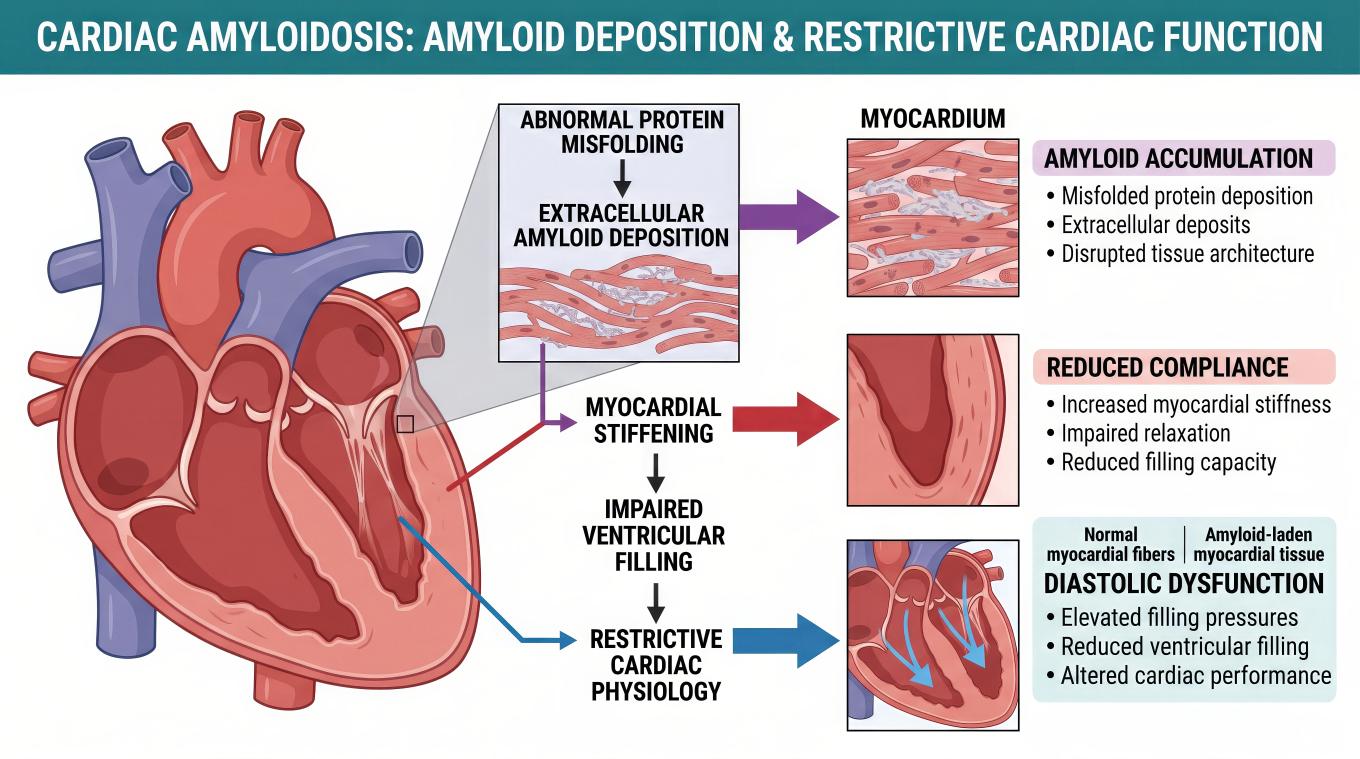
Amyloidosis (am-uh-loy-doh-sis) is a rare disease in which abnormal proteins build up in various tissues and organs leading to progressive dysfunction.
Two Types of Cardiac Amyloidosis
The most common types of amyloidosis affecting the heart are called light chain cardiac amyloidosis (AL) and transthyretin cardiac amyloidosis (ATTR-CM). The major effects of cardiac amyloidosis include abnormal heart muscle thickening and progressive heart failure symptoms.
At Saint Francis Heart and Vascular Institute (HVI), our comprehensive heart care and high level of expertise mean you can expect an accurate diagnosis and the best available treatment as you navigate your heart health journey.
Symptoms
- Fatigue
- Dizziness or feeling light-headed
- Shortness of breath, particularly when active or lying down
- Chest pain or dull pressure when active
- Swelling in the legs, ankles or abdomen
- Numbness and/or tingling in hands and feet
Call 911 or go to your nearest emergency room immediately if you have chest pain, trouble breathing, fainting, sudden weakness or numbness on one side, trouble speaking, or symptoms that start suddenly and feel severe.
Diagnosis
If your doctor suspects cardiac amyloidosis, they may order one or several of the following tests:
- Electrocardiogram
- Echocardiogram
- Cardiac magnetic resonance imaging (cMRI)
- Nuclear Medicine Scan (PYP/PDP)—injection of a tracer to help identify the presence of abnormal protein within the heart. This is typically used for patients who have amyloidosis and need to pinpoint their specific type.
- Blood and urine tests
AL and ATTR-CM are managed differently, so accurate diagnosis is very important. Multiple tests may be required to rule out other conditions.
Treatment
AL and ATTR-CM are progressive diseases, meaning they tend to worsen over time. While there is no cure, there are effective treatments for managing symptoms and slowing disease progress.
Two common types of medication treatment for cardiac amyloidosis involving the TTR protein:
- Silencers: reducing the body’s production of TTR
- Stabilizers: reducing the abnormal folding of the TTR protein to prevent accumulation in the heart (or elsewhere in the body)
AL amyloid is treated by the hematology and oncology specialists at Saint Francis Cancer Centers. This care is delivered in a team-based approach, collaborating with special cardiologists experienced in the co-management of amyloid patients.
Image

Aaron Jonathan Kelkhoff, MD
Aaron Jonathan Kelkhoff, MD
Dr. Kelkhoff is a board-certified and fellowship-trained non-invasive cardiologist with sub-specialty training in advanced cardiac imaging techniques. His clinic focuses on adult general cardiovascular disease and cardiovascular disease prevention as well as a sub-focus in cardio-oncology.
Image

Mohamad Hussien Khattab, DO
Mohamad Hussien Khattab, DO
Mohamad Khattab, D.O. is a leading cardiologist at the Saint Francis Heart and Vascular Institute. Dr. Khattab specializes in providing advanced heart health treatments, including coronary artery disease, cardiac imaging, and preventative cardiology
Get Care Now
If you think you may have a heart problem, call your primary care provider. If you do not have a primary care physician and you are looking for heart care in Tulsa, call the Well Connected Hotline at 918-488-6688 to find a primary care doctor and schedule an appointment.